
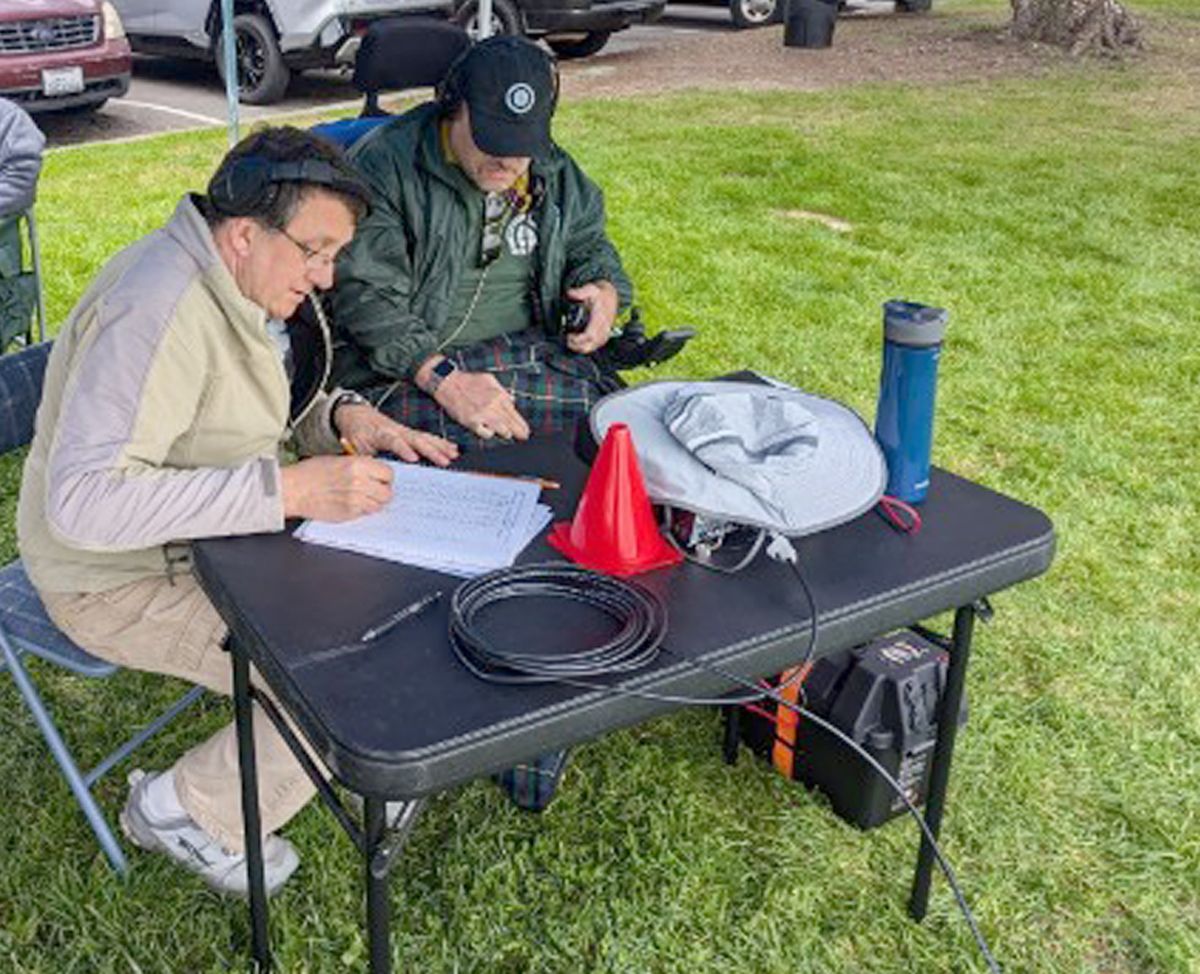
When Jon Bousselot passed his first amateur radio license exam in 2015, he began looking for a local group where he could meet other radio enthusiasts and learn more about the hobby. He soon found that community in the Amateur Radio Club of El Cajon.
Bousselot, now the club’s president, said many new members arrive with a similar story — an interest in radio, electronics or communication that eventually leads them to seek out others who share the hobby.
“I had several ham friends while growing up, and knew these clubs still existed,” Bousselot said. “I wanted to socialize with like-minded hobbyists and see what they were doing.”
Amateur radio, often called ham radio, has long attracted people interested in electronics and communication. Bousselot said his fascination began when he was young, listening to shortwave broadcasts from around the world with a simple wire antenna strung through the trees.
“I would hang a bunch of wire in the trees and listen to broadcasts from all over the world, like the BBC World Service,” he said. “At night, AM radio would often open up for stations across the United States.”
Club Treasurer Mike Oberbauer said his own involvement grew out of a desire to better understand emergency communication following the devastating San Diego County wildfires in 2003. After learning there was a radio club in his city, he began attending meetings and gradually became more involved.
During that time, Oberbauer learned about a weekly radio “net,” an organized on-air gathering where amateur radio operators check in and communicate over a designated frequency.
“The net controller was ready to hand over the responsibility,” Oberbauer said. “I picked up my handheld radio and tried to follow through with it.”
An experienced member of the club — known in ham radio circles as an “Elmer,” or mentor — helped him learn how to run the net, and Oberbauer soon became more active in the organization.
Today, club meetings include announcements, discussions about upcoming events, and opportunities for members to share projects or technical challenges they are working on.
“Sometimes someone will talk about a project they started and ask for help finishing it,” Bousselot said. “With the years of collected experience in the room, people usually get pointed in the right direction, or a small team forms to assist.”
The club also encourages members to experiment with modern technology while staying true to the hobby’s hands-on roots. In the early days of amateur radio, enthusiasts often built much of their own equipment. While many radios are now commercially available, members still build antennas, solder components, and experiment with computer-controlled devices.
Small single-board computers such as Raspberry Pi and Arduino controllers are increasingly being paired with radios, allowing operators to link communication equipment with computers, satellites, and even the internet.
“All of amateur radio is a volunteer effort,” Bousselot said. “We invest our time to learn this hobby and become proficient at communications and troubleshooting.”
Those skills can be useful when other communication systems fail. Amateur radio operators often practice emergency communication techniques so they can relay information if disasters disrupt phone or internet service.
Beyond the technical side, members say the club is also about friendship and shared learning.
“It’s most rewarding when we meet for an event, workshop, or project and people go home having learned something new,” Bousselot said. “Success through teamwork.”
Learn more about the club at www.wa6bgs.us/home.