
Today, El Cajon is one of East County San Diego’s major suburban cities, but its origins lie in a valley shaped by ranching, agriculture, and geography long before modern development.
The city’s name comes from the Spanish El Cajón, meaning “the box,” a reference to the way the valley is enclosed by surrounding foothills. The name was already in use during the Mexican and early American periods and eventually came to be associated with the broader settlement area that would evolve into the modern city, according to research.
Before urban growth, the El Cajon Valley was part of a wider landscape of grazing land tied to early Spanish mission-era use in Alta California. The surrounding hills formed a natural basin that supported cattle ranching and seasonal agriculture, while also creating a sense of isolation from coastal San Diego.
In the mid-19th century, the area became part of the Mexican land grant system through the establishment of Rancho El Cajón. This large tract once included much of what is now El Cajon and the surrounding East County communities, such as Santee. After California became part of the United States, these ranch lands were gradually subdivided and sold, opening the valley to more permanent settlement.
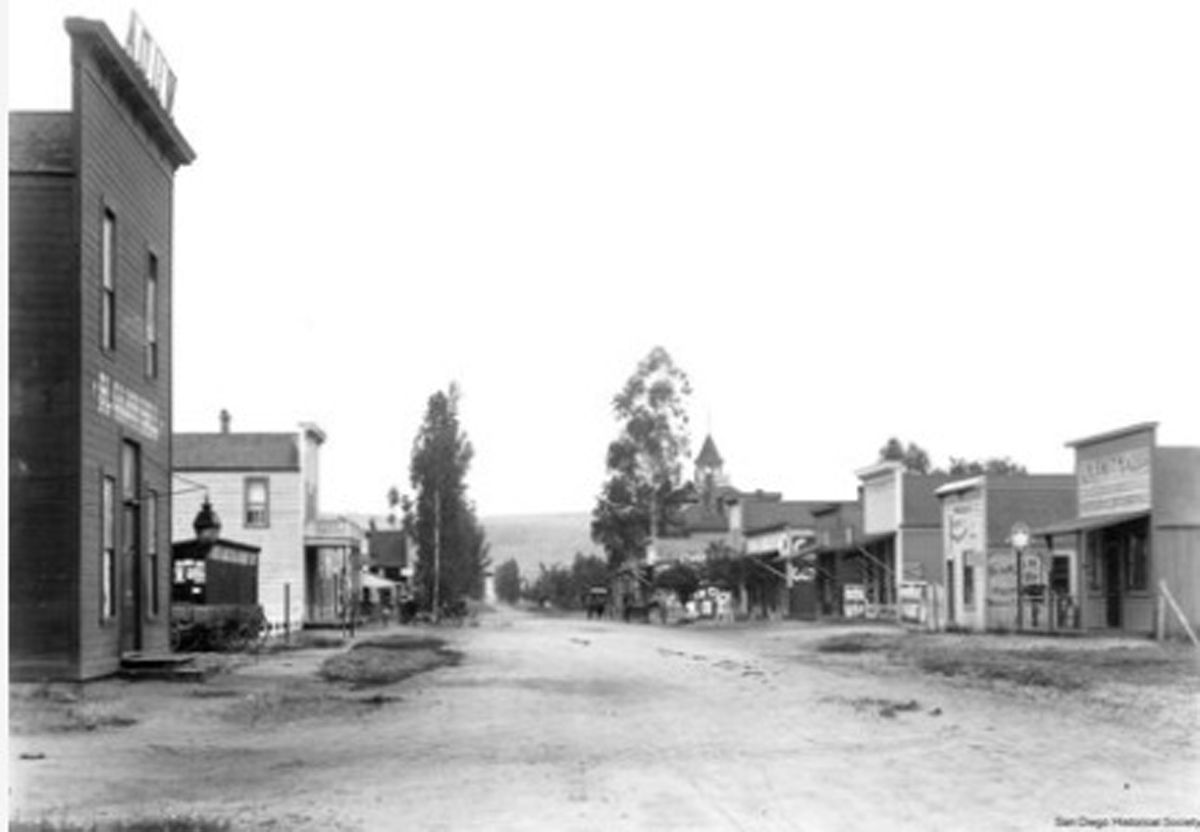
By the late 1800s, small farms and homesteads began to appear as transportation routes expanded inland from San Diego. Rail and road access helped connect the valley’s agricultural production to coastal markets, supporting crops such as citrus, grapes, and other agricultural products. Despite this growth, El Cajon remained largely rural, with a modest town center serving surrounding farmland.
El Cajon was formally incorporated in 1912, though at the time it functioned primarily as a small agricultural town. For decades, its economy remained tied to orchards, poultry farms, and open agricultural land, with development concentrated around a compact downtown core.
The most dramatic transformation came after World War II when Southern California experienced rapid population growth. Suburban expansion spread into East County, and El Cajon became a major center for new housing development, schools, and commercial corridors. The agricultural landscape steadily gave way to residential neighborhoods and retail centers throughout the 1950s and 1960s.
Over time, El Cajon evolved into one of East County’s key urban hubs, shaped by its position along major transportation routes and its accessibility to downtown San Diego. Yet traces of its earlier identity remain in its street patterns, older neighborhoods, and surrounding foothill landscape.
Now, El Cajon is said to reflect that layered history: It is a city built over ranchland and farmland, where suburban growth sits on top of a valley once defined by open space and agriculture.
The name “El Cajón”—the box—seems to still fit the geography that shaped it.