
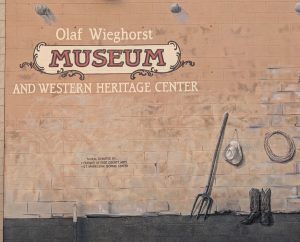
 One of America’s most celebrated painters of the Old West wasn’t born on a ranch or raised on the frontier. He grew up in Denmark, where a childhood fascination with horses and a traveling Wild West show sparked a dream that would eventually bring him to the United States — and later to El Cajon.
Olaf Wieghorst’s love of horses began early. According to Jack Doherty, museum operations and business manager at the Olaf Wieghorst Museum, a stable across the street from Olaf’s school became his favorite destination after classes.
“Olaf became enamored with horses as a child,” Doherty said. “By age 8, Olaf was drawing horses on every scrap of paper he could find.”
The defining moment came in 1912 when a Danish version of an American Wild West show visited his hometown.
“Olaf snuck in. He was entranced,” Doherty said. “The cowboy garb. The bucking horses. The six-shooter fired in the air. This was the life!”
As a teenager, Olaf apprenticed at a country store, making deliveries by horse and buggy while spending his free time reading Buffalo Bill western magazines. His enthusiasm for riding eventually cost him the job, but it never weakened his determination to experience the American West.
That opportunity came in 1918 when he signed aboard an America-bound steamer as a cabin boy. After arriving in New Jersey, he made his way to New York and enlisted in the United States Cavalry within a year.
While living in New York, Olaf experimented with sketches, pen-and-ink drawings, paintings and etchings. Some of his work appeared on rodeo program covers at Madison Square Garden. But his career with the New York City Police Department left little time to pursue painting full-time.
His artistic career flourished after he retired and moved to El Cajon.
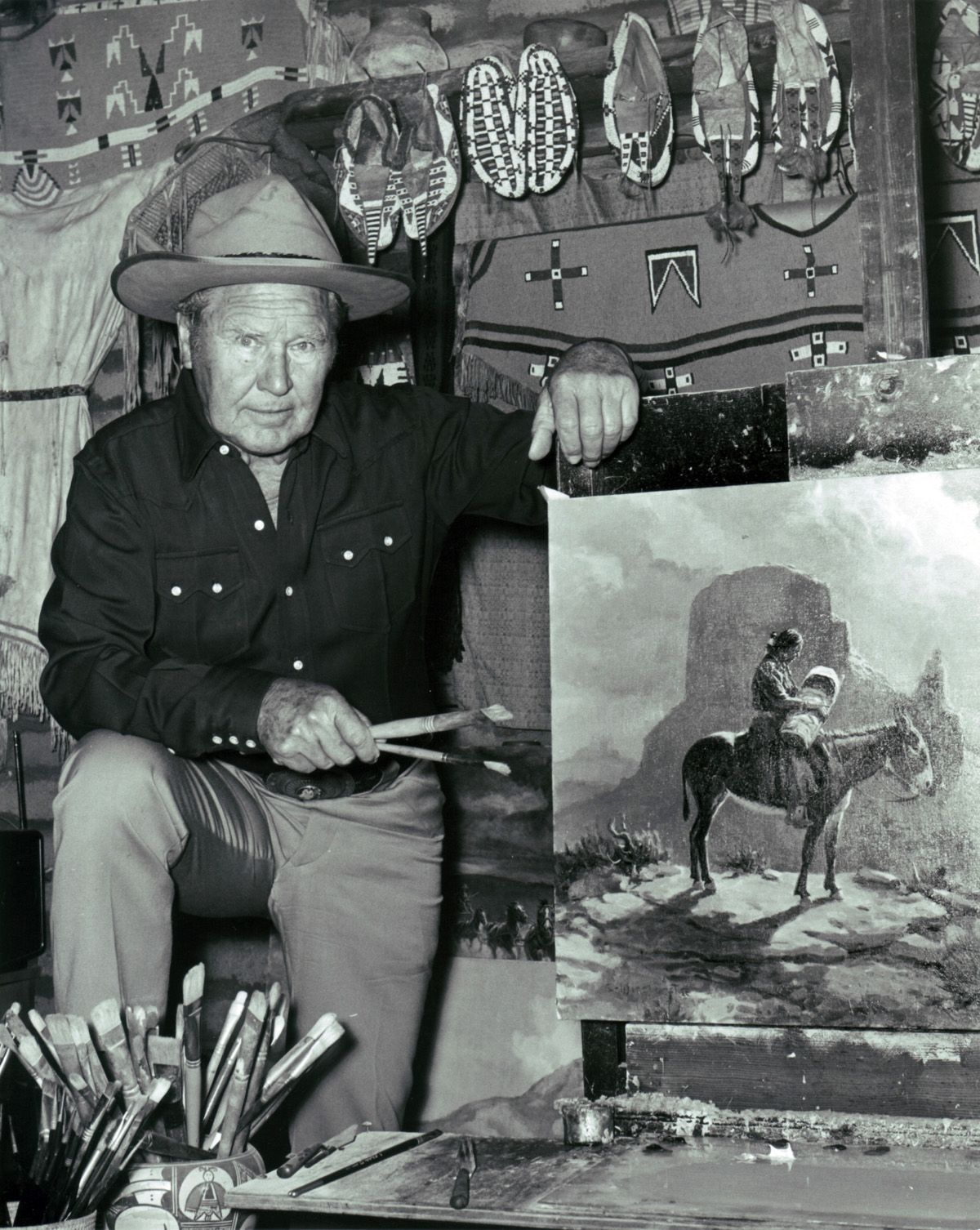
“In El Cajon, Olaf was now retired with a small pension. He could devote full time to his art and building an art business,” Doherty said.
With the freedom to paint every day, Olaf traveled to historic Western towns, explored dramatic landscapes and visited Native American reservations and villages in search of authentic subjects. His work became known for its historical detail and realism.
“In New York Olaf drew bucking horses,” Doherty said. “In El Cajon, he painted inhabitants of the west against dramatic landscapes with such realism his canvases could be photographs.”
As America’s fascination with Western movies grew during the 1940s and 1950s, so did Olaf’s reputation. His artwork appeared in magazines and commercial calendars, introducing his vision of the West to audiences nationwide. Although some critics initially dismissed Western art, strong sales eventually earned him recognition among collectors and galleries.
For Doherty, Olaf’s life represents the American dream.
“Olaf Wieghorst’s story is a quintessential American story,” he said. “A foreigner’s fascination with an aspect of American culture drove an overwhelming desire to immigrate and experience it. He wanted to come. He wanted to be here. He wanted to be an American.”
That dream carried Olaf from a small town in Denmark to national recognition as one of the country’s most respected Western artists. Even late in life, his passion remained unchanged. At age 88, Doherty said, Olaf summed up his lifelong pursuit in a single sentence: “I’m still trying to do my best painting.”