
The FIFA 2026 World Cup is over and defending European champion Spain appears to have vindicated itself as the world’s soccer super power after defeating defending World Cup champion Argentina, 1-0, in extra time in Sunday’s grand finale in front of a sellout crowd of 80,663 spectators at MetLife Stadium in East Rutherford, N.J
The numbers were massive all around.
An estimated 35 million viewers turned into the broadcast on FOX and 22 million more on Spanish language services in the United States. The estimated worldwide audience for the broadcast — in all languages — is estimated to be 1.8 billion to make it the most watched sporting event in the world.
The NFL Super Bowl draws around 125 million viewers domestically and up to 200 million world wide.
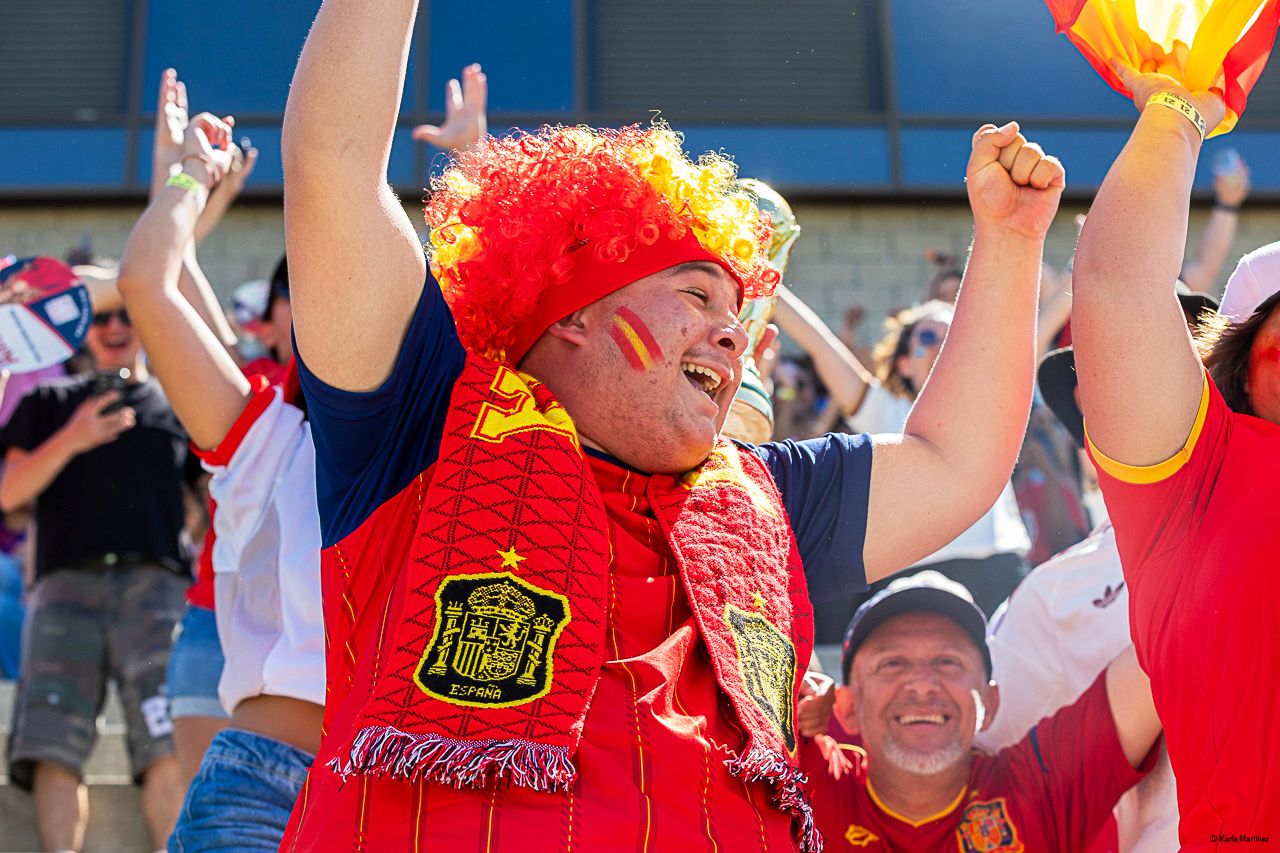
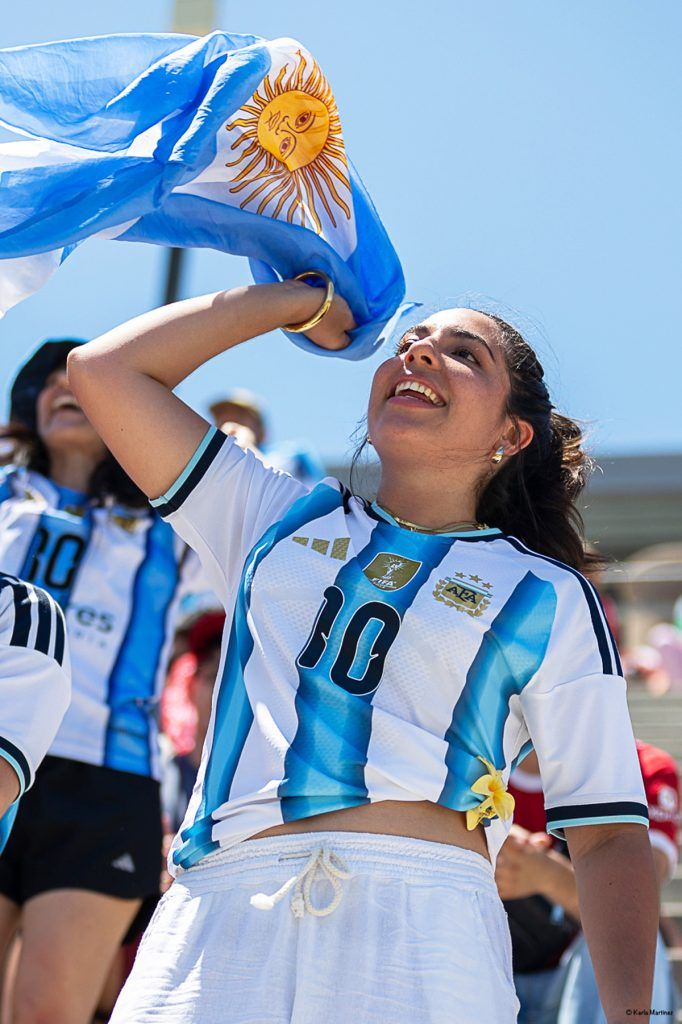
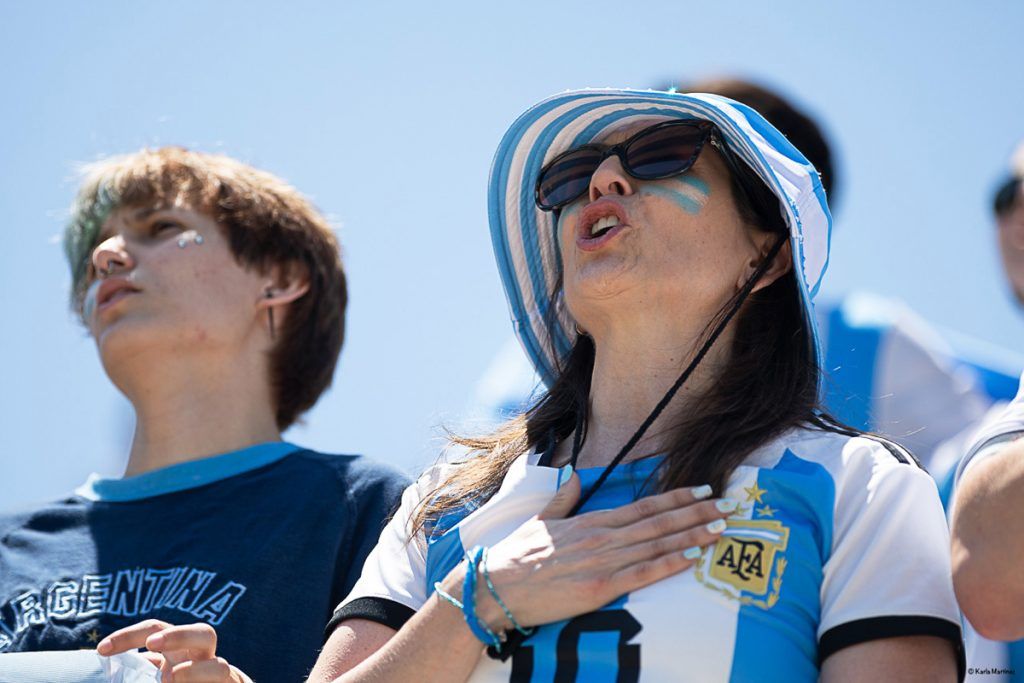
Locally, at estimated 400 fans braved a 90-degree temperature and corresponding high humidity levels to take in the proceedings on three large screen television screens set up at Southwestern College’s DeVore Stadium.
It was a convenient location for East County aficionados to get their final World Cup soccer kick.
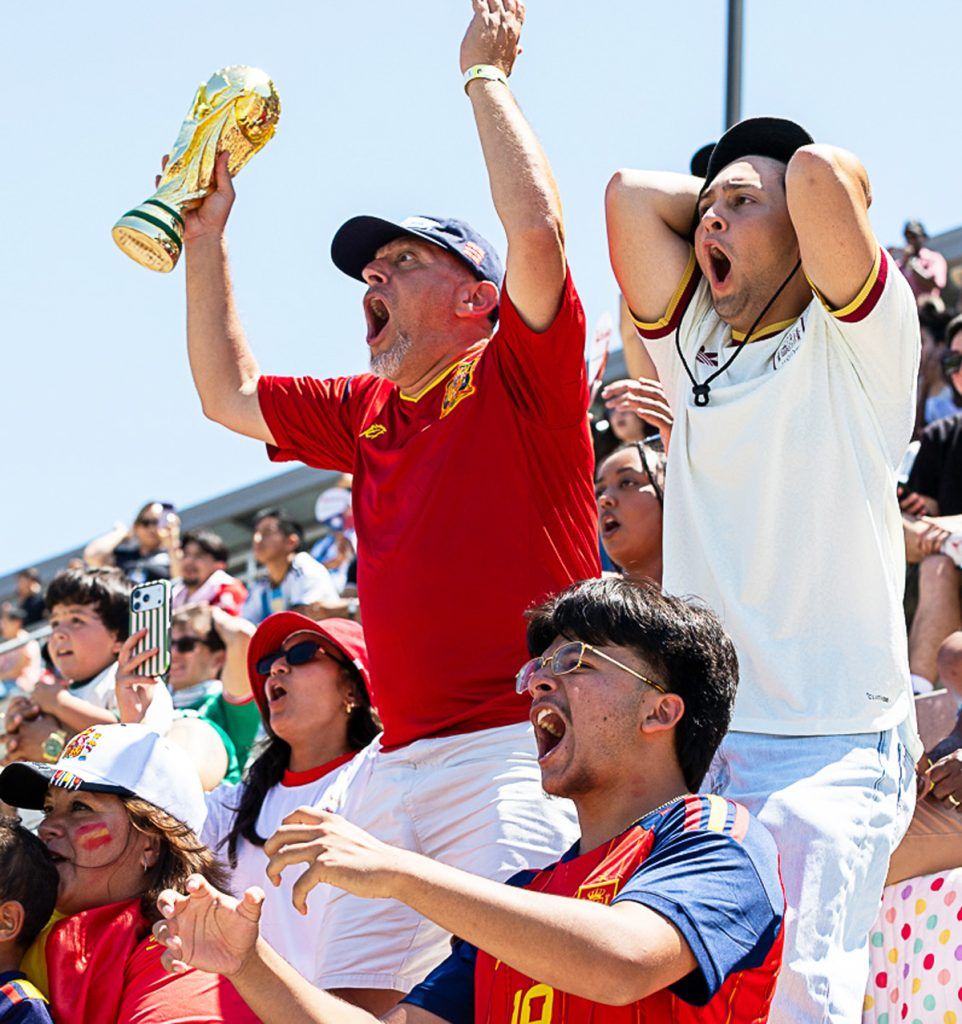
Fans donned Argentine and Spanish uniforms and cheered for their respective teams or just simply cheered for the beautiful game. Despite the low score, there was plenty of action on the pitch, though one-sided. Spain dominated the match with a commanding 20-3 edge in shots and 68 percent possession.
But the reigning champions would not be easily defeated and it took 16 minutes of extra time to unlock the scoreless standoff.
The game-winning goal was a classic as Nico Williams Jr. nodded a high ball past onrushing Argentine goalkeeper Emiliano Martinez, who had kept his team in a position to possibly extend the match into the unpredictable kicks-from-the-mark tiebreaker with a slew of acrobatic saves. The ball, however, came straight to the feet of Spain’s Ferran Torres, who blasted a one-time shot under the crossbar.
Nothing but net.
Goooooooooooooooooooool!
Argentina, despite playing a man down due to a red card in the dying seconds of stoppage time, pushed up with all its remaining might but not even the great Lionel Messi could save his team from defeat.
TV viewers instead saw close-ups of the 39-year-old forward sitting on the pitch in dejection, possibly wondering if this was his last World Cup appearance.
Messi, with back-to-back Major League Soccer MVP awards with Inter Miami in hand and formally recognized as the most decorated professional men’s footballer with 46 team titles and 1,320 goal contributions (910 goals and 420 assists) in 22 seasons, had seemingly held the world on his shoulders.
He led Argentina to the 2005 FIFA World Youth Cup championship with six goals and two assists and was rewarded with the Golden Ball trophy emblematic of the best player in the tournament.
He led Argentina to the gold medal at the 2008 Summer Olympic Games.
He led Argentina to a runner-up finish to Germany in the 2014 World Cup as the Golden Ball winner. He became the first player to win the Golden Ball twice after leading Argentina to its first World Cup title in 36 years in a 4-2 victory in the kicks-from-the mark tiebreaker over France in 2022 in Qatar in front of an estimated 1.5 billion TV audience.
His landmark signing with Inter Miami in 2023 is said to have taken MLS to a new level and boosted soccer awareness overall in the United States.
During the 2026 event, he became the first men’s player to appear in six World Cups and the first men’s player to score in five World Cups.
The equally legendary Pele, who received three days of national mourning in his native Brazil upon his death in 2022 at the age of 82, was voted FIFA Player of the 20th Century (with Diego Maradona) after scoring 92 goals in 77 international matches and 1,279 in 1,363 games over a storied career that ended with the New York Cosmos of the North American Soccer League. He won three World Cup titles — 1958, 1962 and 1970.
His appearance with the Cosmos for a NASL preseason match at Balboa Stadium in March 1976 against the San Diego Jaws created a traffic gridlock of unbelievable proportion as 18,128 fans descended on the centrally located aging facility to watch the Jaws hold Pele scoreless in a 1-1 draw.
The Jaws played an exhibition match at Southwestern College against the Mexican Olympic team with Hugo Sanchez scoring both Mexican goals in a 2-1 win. Sanchez would later play for the San Diego Sockers (the successor NASL franchise to the Jaws) for two seasons in 1979 and 1980, scoring 26 goals in 32 matches and 13 goals in 13 playoff games.
It was somehow appropriate that greatness would once again descend on DeVore Stadium 50 years later.
Though the World Cup Final viewing party did not attract thousands as hoped (Mexico was not a participant), those who attended enjoyed a world-class experience — if they could find shade.
By the numbers
•England defeated France, 6-4, in Saturday’s third place game as France’s Kylian Mbappé secured the Golden Boot trophy with two goals to give him 10 for the tournament ahead of Messi (eight) and England’s Jude Bellingham (seven).
•Individual award winners also included Spanish captain Rodri (Golden Ball ), Spanish goalkeeper Unaim Simon (Golden Glove) and Spanish defender Pau Cubarsi (Best Young Player).
•Spain set the standard for excellence at the 2026 tournament with a goal-differential of 14-1 by allowing one goal in eight games.
•Team USA’s Round of 16 match against Belgium attracted 33.1 million viewers on FOX as the most watched soccer match in U.S. history.
•The U.S. Round of 32 match against Bosnia & Herzegovina drew a U.S. viewership of 24.4 million. The match also set a Spanish-language record 9.1 total audience delivery for Telemundo.
•The Argentina-England semifinal match on FOX drew 16.9 million viewers as the most-watched World Cup semifinal in U.S. English-language history. The France-Spain semifinal brought in an additional 13.1 million viewers.
•Ratings for the final in Spain collected an 87.1 percent share.
•The Mexico-England Round of 16 match became the most-watched telecast all-time for Spanish-language TV in the United States with 23.2 million viewers.
•The quarterfinal match between Norway and England attracted 21.8 million U.S. viewers to make it the most-watched FIFA non-U.S. national team match in English-language U.S. history.
•The 2014 World Cup final between Germany and Argentina in Brazil was viewed by 1.0 billion while the 2018 final between France and Croatia in Russia was viewed by 1.1 billion.
•The most striking aspect of the 2026 World Cup was the diversity spread across all national teams, including France, Spain, England, Belgium and even Germany to forge a new identity, especially among younger generations.