
When public schooling ends at age 22 for individuals with intellectual and developmental disabilities, a shrinking social circle and support system has families wondering what to do next.
Going to school was Heather’s social life. She made friends, including a best friend who she keeps in touch with today. But as her public education concluded, Heather and her mom had to make another set of decisions: Where would Heather go next? Where could she continue building social connections? Where would she grow in independence and thrive as a young adult?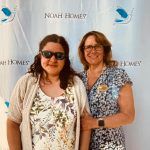
For California adults with intellectual and developmental disabilities like Heather, extended public schooling is offered through Adult Transition Programs (ATPs) after high school through age 22. Whether a student with disabilities completes their schooling after high school or a transition program, what comes next can look unclear. This is why learning to self-advocate is so important.
“What surprised me was that as parents, we were kind of on our own to find a program for our loved one after high school and the transitional program. As the program was about to end, there wasn’t a ton of guidance. We were handed a list of great choices, but had to figure out what to do next,” says Heather’s mom Theresa.
After doing her own research, Theresa eventually enrolled Heather in a day program listed on a handout she was given. Day programs are structured daily programs that offer life and employment skills, opportunities to socialize and grow in independence, and more. Sadly, the day program closed shortly after Heather was enrolled, due to the COVID pandemic. And again, Theresa and Heather were navigating what to do next.
“Heather is a very social and compassionate person,” says Theresa. “I wanted her to have the opportunity to continue meeting people and being social.”
During this time, Theresa had already retired from her job as a first responder where she first learned about Noah Homes, our nonprofit and residential community that provides exceptional care to 90 adults with intellectual and developmental disabilities in Spring Valley. Theresa also learned about Noah’s PERCH.
Noah’s PERCH is a social club for and by adults with intellectual and developmental disabilities. It serves the folks who live at Noah Homes as well as individuals and families throughout San Diego County. During the pandemic, PERCH (formerly Club Noah) offered virtual events, games, and more to people stuck at home. Theresa got her former employer, San Miguel Fire & Rescue, to co-host a virtual fire station tour. As things started opening, we transitioned PERCH to in-person events like talent shows, surfing, animal therapy, and more.
“Day programs were very limited during COVID, and it was really hard for everyone,” says Theresa. “I was just so grateful PERCH was available for my daughter, especially as things opened up. I didn’t want her in the house all the time, sleeping, or watching TV, or being on her phone. Social interaction is so important for her continued growth.”
Heather, who loves bowling, the Padres, Yu-Gi-Oh! characters, and singing Disney songs, attended PERCH events, with the PERCH talent show becoming one of her favorites. Theresa would attend the events, too, sticking around to help with clean-up.
Heather was also on the interest list for residency at Noah Homes and spent time at PERCH events and Noah Homes’ Enchanted Village.
“I didn’t think I would place my daughter in a home, but thought if I ever did, there was no other place I would want her to be than at Noah Homes.” In 2026, Heather moved in, and we are so happy she is a part of our community.
“It’s a big transition after 32 years with Mom and now being on her own,” says Theresa. “But I have peace of mind knowing my daughter is in good hands.”
For parents navigating what life looks like after public school for their young adult child with intellectual or developmental disabilities, Theresa says, “Talk to other parents of special needs individuals and reach out to Regional Center for their list of opportunities. Explore all options until that voice inside you says, ‘This is it!’ For those located in San Diego County, Theresa also suggests getting involved with Noah’s PERCH, finding a day program like St. Madeleine Sophie’s Center, and getting on the interest list for Noah Homes.
As Heather adjusts to her new life at Noah Homes, Theresa is adjusting to life as a parent whose kid has moved out for the first time. “I’m learning to spread my wings, too, not having Heather around all the time has been a big adjustment,” says Theresa, who recently became a board member of the Noah’s Ark Angel Foundation, and who still loves joining Heather for PERCH events and other activities. “Finding that special, caring and compassionate community like I have found in Noah Homes will help carry you through,” says Theresa.
Just like Heather and Theresa, many of the families we support have gone through a lot of discovery and important decision-making, especially as their children grow up and leave home. Transitions aren’t easy, and I echo Theresa’s encouragement to reach out to local resources and engage with other families in your shoes. Find a community that honors your needs and choices.
As someone who has proudly supported individuals with intellectual and developmental disabilities since I was in elementary school, and now at Noah Homes for nearly 40 years, I am grateful for our community and to share a message of encouragement and care.
If you are a family navigating post-school life for your loved one with intellectual and developmental disabilities, Noah’s PERCH exists to help individuals stay social, have fun, and overcome isolation. Learn more at noahsperch.org.
Sandra Rocco-Melville is Executive Director of Noah Homes.